

 For more than two decades, that claim has shaped how many Americans understand the Israeli-Palestinian conflict. The story is straightforward: Israel offered peace, Yasser Arafat rejected it, and the Palestinians chose conflict over statehood.
But history is rarely that simple.
If peace was repeatedly available, why has it remained so elusive? Why have negotiations failed? Why has settlement expansion continued?
The historical record presented below examines several key moments often cited in debates about the conflict, including Camp David, the assassination of Yitzhak Rabin, the political division between Hamas and the Palestinian Authority, and the Arab Peace Initiative. Together, these examples raise a broader question: when opportunities for peace required territorial compromise, which objective carried greater weight: peace or expansion?
The discussion also considers a common objection to territorial compromise: that terrorism would continue regardless of any political settlement. Egypt and Jordan have maintained peace with Israel for decades, and many armed movements have lost support when political alternatives emerged. The question is not whether every act of violence would disappear, but whether peace could reduce the conditions that sustain it.

The following examples examine key moments that complicate the familiar narrative that peace was available and simply rejected. Taken together, they suggest that the obstacles to peace were often intertwined with questions of territory, sovereignty, and political incentives.
The Sovereignty Question
One of the most misunderstood peace negotiations occurred at Camp David in 2000. The common story is that Israel offered the Palestinians a generous state and Arafat rejected it. But the actual proposal remains the subject of considerable debate.
The precise details of the proposal are disputed, and different participants have described it differently. However, several features appear consistently across many accounts of the negotiations: [1][2][3]
- Palestinians would not immediately receive full control of all territory designated for a future state.
- Israel would retain major settlement blocs in the West Bank.
- Palestinian territory would be divided into multiple sections rather than forming a fully contiguous state.
- Israel would maintain significant control over borders, security arrangements, and airspace.
- The proposed Palestinian state would be demilitarized.
Some later accounts claimed the offer reached as much as 95% of the West Bank. Critics argue that such figures can be misleading because they often exclude existing settlement blocks from the calculation and may not fully reflect the territory’s fragmentation or the restrictions that would have remained in place.
Whatever percentage is used, the central dispute was not simply about the amount of land. It was about sovereignty. Critics of the proposal argue that the arrangement would not have created a fully independent Palestinian state comparable to other sovereign nations because significant aspects of territory, borders, security, and movement would have remained subject to Israeli control.
The Advantage of Division
The government of Israel was aware that Qatar was sending money into Gaza and allowed the transfers to continue. Although the funds were officially intended for humanitarian purposes, the arrangement strengthened Hamas.
Israeli leaders openly discussed the political advantages of having Hamas govern Gaza while the Palestinian Authority governed the West Bank. A divided Palestinian leadership made it more difficult for the Palestinians to negotiate as a unified political entity and allowed Israeli leaders to argue that there was no single partner for peace.[4]
If a unified Palestinian government was necessary for meaningful negotiations, then policies that reinforced political division had a predictable consequence: they made a comprehensive peace agreement less likely. The result was a political environment in which negotiations remained stalled while settlement expansion continued.
The Murder of Peace
Israeli Prime Minister Yitzhak Rabin was assassinated in 1995. Rabin had signed a peace treaty with Jordan in 1994 and was a leading advocate of the peace process with the Palestinians. His assassin opposed the peace process because it would have required relinquishing territory that he believed belonged to the Jewish people by biblical right.[5]
Territorial Ambitions

Peace requires Israel to make territorial concessions, halt settlement expansion, and accept the creation of a genuinely viable Palestinian state. But ideas of territorial expansion have also appeared repeatedly across generations of Israeli leadership.
Israel’s first Prime Minister, David Ben-Gurion, expressed this view in a 1937 letter to his son:
“A Jewish state on only part of the land is not the end but the beginning.”[6]
Nearly a century later, Prime Minister Benjamin Netanyahu was shown a map of the biblical Promised Land and asked whether he identified with the vision of Greater Israel. His response was brief:
“Very much.”[7]
These statements do not prove that Israel intends to control every territory associated with either interpretation of Greater Israel. They do suggest, however, that territorial expansion was not merely an accidental byproduct of the conflict but a political idea that appeared across generations of Israeli leadership.
Taken together with the preceding examples, they reveal a more complicated picture than the familiar claim that peace was offered and rejected, raising the possibility that the central obstacle has been the difficulty of reconciling peace with competing territorial objectives.
Peace or Territory?
In 2002, the Arab League proposed a comprehensive peace initiative. The proposal called for Israel to withdraw to the pre-1967 borders, including East Jerusalem, the West Bank, and Gaza, and to accept a reasonable solution to the Palestinian refugee issue. In return, Israel would receive peace and normalized relations with the Palestinians and every member of the Arab League.[8]
The proposal effectively offered Israel recognition, normalized relations, and peace with the broader Arab world in exchange for relinquishing territory captured in 1967. Although the initiative remained on the table for years, it never became the basis for a sustained peace process. Critics argue that if peace was the overriding objective, the proposal would have received far greater attention than it ultimately did.
Sources
[1] Charles Smith, Palestine and the Arab-Israeli Conflict (10th Edition), pp 474-481
[2] United Nations, Mideast Peace Process/Camp David Summit (Jul 2000) – Abu-Mazen’s Speech
[3] Foundation of Middle East Peace, West Bank Final Status Map Presented by Israel – Jul 2000
[4] Times of Israel, “Netanyahu defended Qatar-Hamas cash transfers”
[5] Britannica, “Assassination of Yitzhak Rabin | Israeli Prime Minister, Peace Deal, & Oslo Accords”
[6] The Journal of Palestine Studies, “JPS Responds to CAMERA’s Call for Accuracy: Ben-Gurion and the Arab Transfer”
[7] Times of Israel, “Netanyahu says he’s on a ‘historic and spiritual mission,’ also feels a connection to vision of Greater Israel”
[8] The Guardian, “Arab Peace Initiative”
A common argument against peace is that terrorist organizations would continue fighting regardless of any agreement. But that assumption overlooks a simple reality: most people prefer freedom, security, and opportunity to conflict.
If Palestinians were living in a sovereign state rather than under military occupation, many of the conditions that fuel anger, desperation, and support for armed resistance would be dramatically reduced. People who can travel freely, build businesses, own homes, raise families, and participate in a functioning economy have far more to lose from violence and far more to gain from stability.
This does not mean that every extremist would abandon violence overnight. No peace agreement in history has eliminated every radical group or every act of terrorism. The more relevant question is whether a political settlement would reduce support for violence and create incentives for political participation instead.
There is reason to believe it would. Hamas itself modified its position over time, stating in its 2017 political document that it would accept a Palestinian state within the 1967 borders.[1] Whatever one thinks of Hamas, the shift suggested that political realities could influence even organizations originally founded around armed resistance.
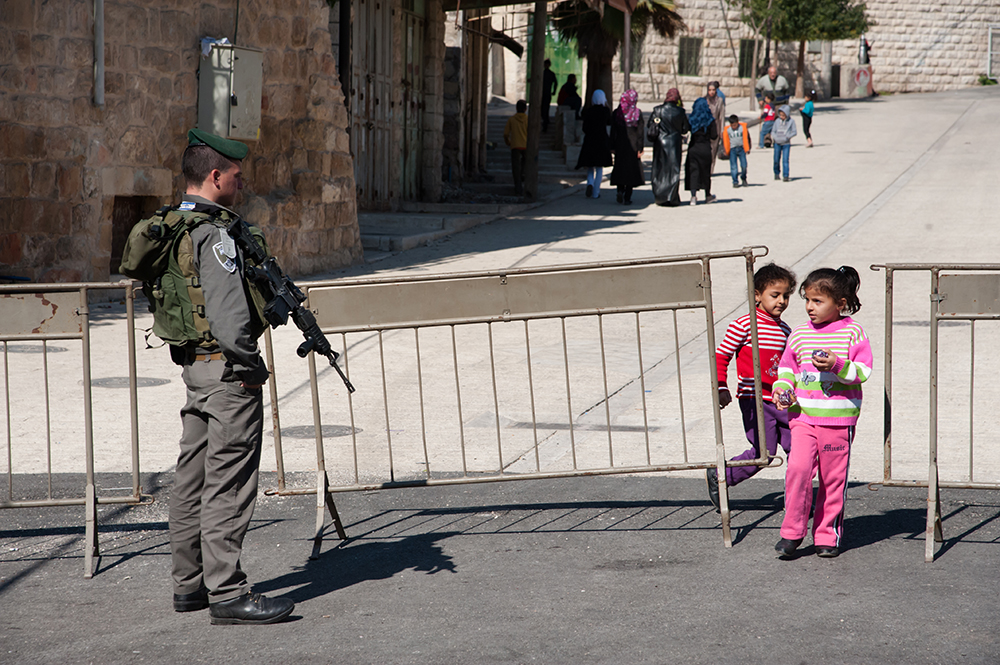 History provides additional examples. Egypt and Jordan both fought wars against Israel and were once considered permanent enemies. Yet after peace agreements were reached, both countries maintained peaceful relations with Israel for decades. The treaties did not eliminate every disagreement, but they transformed the relationship from military conflict to political and diplomatic engagement.
The experience of Egypt and Jordan also challenges the idea that the conflict is fundamentally a religious war between Jews and Muslims. Both countries have overwhelmingly Muslim populations, yet both reached peace agreements with Israel and have maintained them for decades. While religion undoubtedly influences the beliefs of some participants, the conflict is often understood in terms of land, sovereignty, security, and political rights rather than as an unavoidable struggle between faiths.
The lesson is not that peace guarantees the end of all violence. Rather, it is that political settlements can change the environment in which violence operates. When people gain freedom, security, and a stake in a stable future, support for conflict often declines. The question is not whether every terrorist stops fighting. The question is whether peace gives people a better alternative. History suggests that it often does.
Sources
[1] The Guardian, “Hamas presents new charter accepting a Palestine based on 1967 borders”